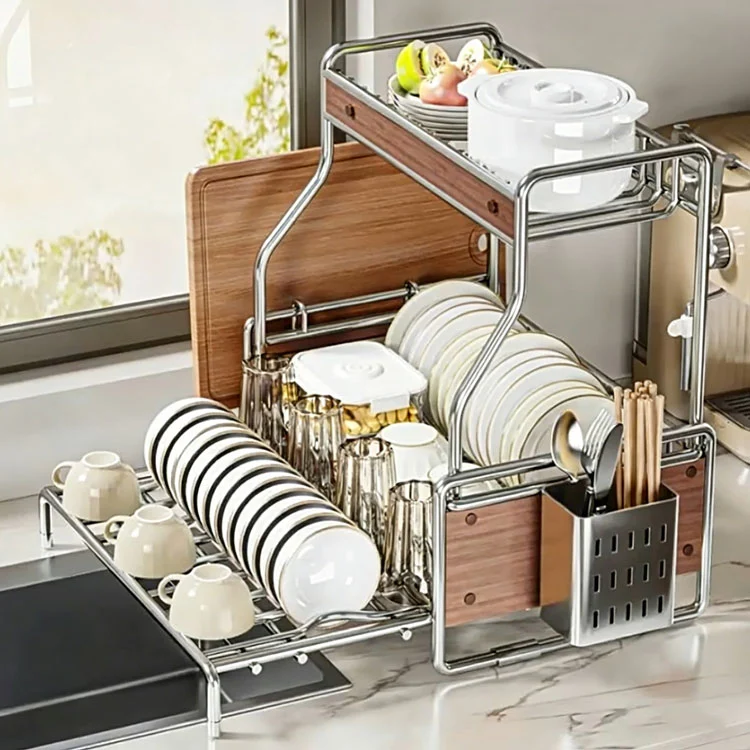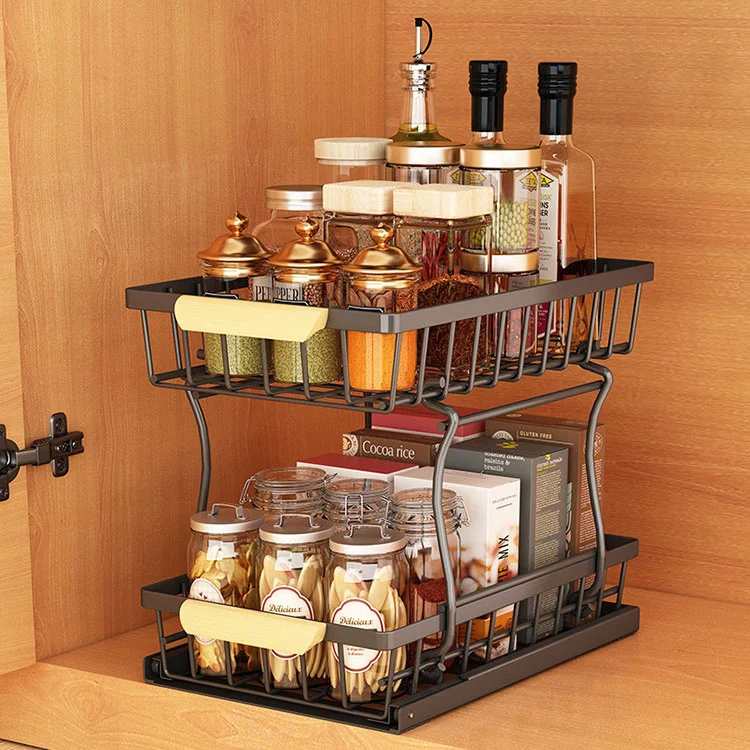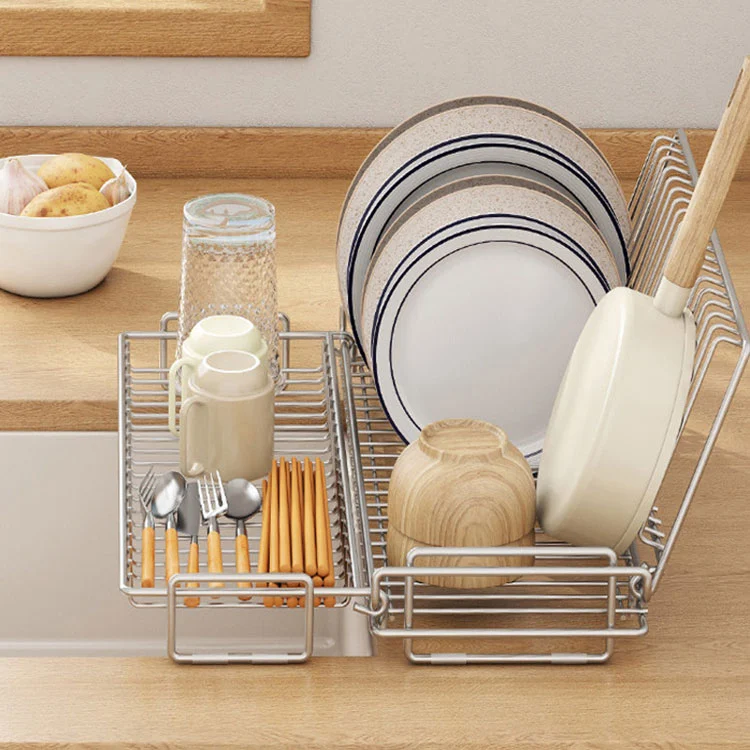
An extensible stainless steel sink drain rack can turn unused sink space into a practical area for drying dishes, draining produce, organizing utensils, and preparing food. This guide explains how the design works, what problems it solves, how to select the right size, and how to maintain it for reliable everyday use.
Kitchen organization is often less about having more storage and more about making better use of the space that already exists. Countertops can quickly become crowded after washing vegetables, rinsing cookware, or cleaning dishes. A conventional drying rack may solve one problem while creating another by occupying valuable counter space.
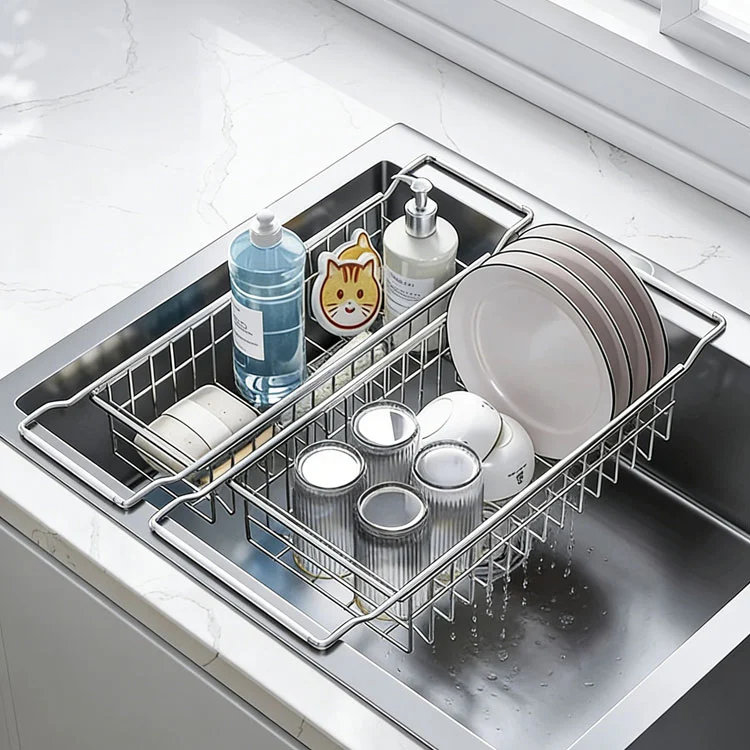
An Extensible Stainless Steel Sink Drain Rack offers a practical alternative. Its adjustable structure allows the rack to span different sink widths, while the open design allows water to drain directly into the sink. Similar extensible racks commonly use stainless steel construction, adjustable support rails, and protective silicone or rubber contact points.
For kitchens where flexibility, cleanliness, durability, and efficient use of space matter, the right sink drain rack can become a useful part of the daily workflow rather than simply another kitchen accessory.
- Why Sink Space Becomes a Daily Problem
- What an Extensible Stainless Steel Sink Drain Rack Does
- Key Design Features That Matter
- Practical Benefits in Everyday Kitchens
- Why Stainless Steel Matters
- How to Match the Rack to Your Sink
- Everyday Uses Beyond Dish Drying
- Design Comparison
- Important Points Before Purchasing
- Cleaning and Maintenance
- Customization for Different Kitchen Needs
- Frequently Asked Questions
- Conclusion
Why Sink Space Becomes a Daily Problem
A sink is one of the busiest areas in a kitchen. It is used for washing dishes, rinsing vegetables, preparing ingredients, filling containers, and handling cookware. Yet the area around the sink is often limited, particularly in apartments, compact kitchens, RVs, rental properties, and modern kitchens designed with minimalist countertops.
After washing dishes, users need somewhere to place wet plates, bowls, cups, or utensils. Putting everything directly on the countertop can leave water puddles behind. A large countertop dish rack solves the drying problem but may permanently occupy valuable workspace.
This is where an over-sink drain rack can change the workflow. Instead of asking where to create additional space, the rack uses the existing sink area as the drainage zone. Water can flow through an open rack structure and return to the sink rather than collecting on the countertop.
What an Extensible Stainless Steel Sink Drain Rack Does
An extensible stainless steel sink drain rack is designed to sit across or inside a sink while adapting to different sink dimensions. Its supporting rails can extend or retract, allowing users to adjust the overall length according to the available space.
Many current designs combine stainless steel frames or baskets with silicone-covered contact points. The adjustable structure can provide a more secure fit, while the open surface supports airflow and drainage. Product specifications vary considerably, so actual sink measurements should always be checked before use.
Key Design Features That Matter
1. An Adjustable Support Structure
The defining feature is adjustability. Fixed racks can be convenient when the dimensions match perfectly, but a sink drain rack with telescoping or extensible rails offers greater flexibility. Some products on the market provide extension ranges such as approximately 41–58 cm or 49.4 cm in overall width, illustrating how adjustable construction can accommodate different kitchen layouts.
2. Open Drainage Surface
A good drainage structure should allow excess water to leave the surface quickly. Perforations, wire grids, or spaced stainless steel tubes can reduce water accumulation and support airflow. This is particularly useful when the rack is used for freshly washed vegetables or dishes.
3. Stable Contact Points
Because the rack rests against the sink rather than being permanently installed, stability is important. Silicone or rubber covers can increase friction and help protect the sink surface from direct metal contact. Several commercially available designs use protective end grips or non-slip covers for this reason.
4. Functional Organization
Some racks are simple flat platforms, while others incorporate plate slots, utensil holders, cup sections, or deeper baskets. The appropriate structure depends on whether the primary task is dish drying, produce washing, utensil organization, or a combination of these activities.
Practical Benefits in Everyday Kitchens
More Usable Countertop Space
The rack occupies the sink area rather than requiring a permanent position on the counter. This can make a noticeable difference in smaller kitchens where every working surface matters.
Less Water on the Countertop
When wet items are placed over the sink, water can drain downward instead of spreading across the surrounding work surface. This helps keep the food preparation area cleaner and easier to maintain.
Flexible Food Preparation
The rack can provide a temporary surface for rinsed vegetables, fruits, herbs, or other ingredients. Some expandable drain racks are explicitly designed for both drying and rinsing produce.
Easy Adaptation
An extensible structure is useful when users move between different sinks or when a kitchen has an unusual sink configuration. Instead of being limited to a single fixed opening, the rack can be adjusted within its specified range.
Why Stainless Steel Matters
A sink is a naturally wet environment, so material selection has a direct effect on product durability and maintenance. Stainless steel is widely used in kitchen drainage products because it provides a durable metal structure and is relatively easy to clean.
Common kitchen drain rack designs use grades such as 304 or 18/8 stainless steel. For example, current products specify 304 stainless steel for the main rack structure, while other designs use 18/8 stainless steel combined with silicone components.
| Design Consideration | Why It Matters | What Users Should Check |
|---|---|---|
| Stainless Steel Grade | Affects corrosion resistance, durability, and overall product quality. | Confirm the stated material grade and intended environment. |
| Surface Finish | Influences appearance and ease of cleaning. | Look for a smooth, well-finished surface without sharp edges. |
| Support Rails | Determine how the rack adjusts and stays in position. | Check extension range and movement quality. |
| Protective Feet | Help improve stability and reduce direct metal-to-sink contact. | Check whether silicone or rubber protection is included. |
How to Match the Rack to Your Sink
Correct sizing is one of the most important considerations. An adjustable rack is not automatically compatible with every sink. Users should measure the sink before purchasing or specifying a product.
- Measure the usable sink width. Measure the distance between the surfaces where the rack will rest.
- Check the rack's minimum and maximum extension. The sink dimension should fall safely within this working range.
- Consider the sink rim. The rack must have sufficient support on both sides without interfering with the basin or faucet.
- Check the usable depth. A wider rack may provide more capacity but could interfere with other kitchen activities.
- Consider the intended load. Plates, cookware, vegetables, and utensils can place different demands on the structure.
For example, one commercially available expandable rack specifies an extension range of 41–58 cm and recommends use with sinks wider than 35 cm. Another retractable stainless steel rack lists a load capacity of 5 kg. These specifications demonstrate why buyers should evaluate dimensions and capacity rather than assuming that every adjustable rack has the same performance.
Everyday Uses Beyond Dish Drying
The name “sink drain rack” can make the product sound limited, but its practical applications can extend well beyond drying plates.
- Dish drying: Place washed plates, bowls, cups, or small cookware above the sink.
- Vegetable rinsing: Rinse produce and allow excess water to drain directly into the sink.
- Fruit preparation: Provide a temporary draining area after washing fruit.
- Utensil drying: Support chopsticks, spoons, forks, and other small kitchen tools.
- Food preparation: Create an additional temporary working area when countertop space is limited.
- Kitchen organization: Keep frequently used items away from a wet countertop.
Some products are specifically designed as dual-purpose drying racks and colanders, demonstrating how one adjustable accessory can support several stages of kitchen preparation and cleanup.
Design Comparison
| Rack Type | Space Requirement | Adjustability | Typical Application |
|---|---|---|---|
| Fixed Countertop Rack | Uses countertop space | Usually limited | Dedicated dish drying |
| Fixed Sink Rack | Uses sink area | Low | Specific sink dimensions |
| Extensible Sink Drain Rack | Uses sink area | High | Drying, rinsing, draining, organization |
| Rollable Drain Rack | Temporary sink use | Flexible storage | Compact kitchens and occasional use |
Important Points Before Purchasing
A product that looks attractive in a photograph may not necessarily fit a particular kitchen. A practical evaluation should begin with dimensions and actual use rather than appearance alone.
- Measure first: Confirm the sink dimensions and rack extension range.
- Evaluate the structure: Check the strength and rigidity of rails, joints, and support points.
- Look at drainage: Ensure the rack does not create unnecessary areas where water can remain trapped.
- Consider stability: Protective feet or silicone grips can help prevent movement.
- Check capacity: Think about the heaviest items that will regularly be placed on the rack.
- Think about cleaning: A simpler structure may be easier to rinse and dry thoroughly.
- Consider storage: If the rack will not stay over the sink, retractability or compact dimensions can be valuable.
Cleaning and Maintenance
Good maintenance does not need to be complicated. Because the rack is exposed to water, food residue, soap, and minerals on a regular basis, routine cleaning helps preserve its appearance and function.
- Rinse the rack after contact with food residue.
- Use a mild kitchen cleaner when deeper cleaning is required.
- Pay attention to joints, corners, and drainage openings.
- Remove trapped debris rather than allowing it to accumulate.
- Allow the rack to dry after cleaning when practical.
- Inspect silicone feet and adjustable rails periodically for wear.
Some stainless steel drainage racks are dishwasher safe, while others specify hand washing and drying. Care instructions should therefore follow the manufacturer's recommendations rather than assuming that every stainless steel model has identical cleaning requirements.
Customization for Different Kitchen Needs
Not every market requires the same sink dimensions, rack width, drainage pattern, finish, or accessory configuration. This creates opportunities for manufacturers and brands to develop products around specific customer requirements.
Ningbo Kaihufeng Technology Co., Ltd. can be positioned around the practical needs of buyers seeking kitchen hardware and sink-related solutions with attention to product structure, usability, and application requirements.
Potential Customization Areas
- Overall rack length and extension range
- Rack width and basket depth
- Stainless steel material and surface finish
- Drainage hole or tube configuration
- Silicone support or anti-slip components
- Utensil holders and accessory sections
- Packaging and private-label requirements
- Product dimensions for specific sink models
For distributors, retailers, kitchenware brands, and project buyers, these details can be more important than simply selecting a generic rack. A product designed around the intended sink dimensions and usage scenario can reduce compatibility problems and create a more consistent user experience.
Frequently Asked Questions
1. What is an extensible stainless steel sink drain rack?
It is a drainage and drying rack designed to sit over or inside a kitchen sink. Its support structure can be extended or retracted to accommodate a range of sink dimensions.
2. Can a sink drain rack be used for vegetables?
Yes. Many open-design drain racks can be used for rinsing and draining fruits and vegetables, provided the product is intended for food-contact applications.
3. Is stainless steel suitable for a wet kitchen environment?
Stainless steel is widely used for kitchen drainage products because it offers a durable metal structure and good resistance to everyday moisture. The specific grade and product construction still matter.
4. How do I know whether the rack will fit my sink?
Measure the usable distance between the sink's supporting surfaces, then compare it with the rack's minimum and maximum extension dimensions. Also check the recommended sink depth, width, and load capacity.
5. Can the rack replace a traditional countertop dish drainer?
For some kitchens, yes. An over-sink design can provide a dedicated drying area while leaving more countertop space available. However, users with large dish loads may still prefer a larger countertop or multi-level drying system.
6. What makes an adjustable rack different from a fixed rack?
An adjustable rack can accommodate a range of sink dimensions, while a fixed rack is designed around a specific size. The adjustable format can therefore provide greater flexibility for different kitchen layouts.
7. Can manufacturers customize sink drain racks?
Customization may include dimensions, materials, finishes, drainage structure, accessories, packaging, and branding, depending on the manufacturer's production capabilities and order requirements.
8. What should commercial buyers confirm before placing an order?
Commercial buyers should confirm material specifications, dimensions, extension range, load requirements, surface treatment, packaging, quality standards, customization details, production quantities, and delivery requirements before placing an order.
Conclusion
An extensible stainless steel sink drain rack addresses a simple but common kitchen problem: there is often not enough convenient space for wet dishes, produce, and utensils. By making use of the sink area, an adjustable rack can help reduce countertop clutter while providing a practical drainage surface.
The most important factors are not simply appearance or price. Buyers should consider the rack's extension range, sink compatibility, stainless steel construction, drainage design, stability, load capacity, cleaning requirements, and intended applications. These details determine whether the product will remain useful after the novelty of a new kitchen accessory has disappeared.
For brands, distributors, retailers, and project purchasers, customization can further improve product compatibility. Working with an experienced supplier such as Ningbo Kaihufeng Technology Co., Ltd. can help buyers explore product specifications and configurations suited to different market and application requirements.
Build a Sink Drain Rack Around Your Market
Whether you need a standard extensible stainless steel sink drain rack or a customized solution for a specific sink, retail program, or kitchenware brand, discussing the required dimensions, materials, structure, and packaging at an early stage can make product development more efficient. If you are looking for a suitable manufacturing solution, contact us to discuss your requirements with Ningbo Kaihufeng Technology Co., Ltd.